|
A few months ago, the CSA board took the decision to set up an unofficial "committee" to address the issue of the declining numbers in our sport.
An appeal was sent out to all paddlers in the country who wished to participate, and to contribute their ideas and vision.
The "committee" held two meetings, both on a virtual platform.
Many useful insights were shared.
Not wishing to leave the initiative just hanging, I put together a short "wrap up" of what, in my opinion, the main factors are in our decreasing numbers.
I sent it to the group last week, but have decided to share it with all of the membership, as there may be some out there who have a contribution that I have not considered.
You might need a comfortable chair and a cup of coffee (or even something a bit stronger), but here we go:
Good Day "Innovations Committee"
Every few months our accountant would send the CSA board members a spreadsheet with a breakdown of our current membership. One could see the numbers and appreciate the trend.
Last month, the data was sent in the form of a bar graph (attached). It was further split up between unions. Although it was the same information, the impact, for me, was far more significant.
It is no secret that our membership is shrinking quite rapidly. One only needs to look at our major river races. The Fish this year had around 400 paddlers. At its peak, it had around 1000 more than that. The Berg, this year, was SA K1. There were only 3 women competitors in total. In the old days there was a 350-paddler cut off. Almost no river race in the country has been spared this decline. Some old and established races are simply falling off of the calendar. The organisers of many more are standing at the ropes, about to throw the towel in.
Members of the CSA board suggested this forum as a means to stimulate conversation around how we could address this membership erosion.
There was significant initial interest (borne out by the number of names on this address list). The first meeting we held was relatively well attended, and some interesting debate ensued.
The second meeting was very poorly attended.
This, in itself, epitomises one of the major problems in our sport (actually, not just our sport): The fact that the pace of modern-day life leaves very little time to dedicate to something that is voluntary and time consuming.
I don't want to leave this initiative just hanging in the air, so thought I would do a short term wrap up.
I deal with this sport on a daily basis, I see the comings and the goings. It is massively frustrating and depressing seeing issues that we have no control over, taking such a toll on our membership. So, allow me the opportunity to unburden myself with a list of issues that, in my opinion, are the main cause of our declining numbers.
I will put them in a rough order of what I deem to be the most impactful. I will also indicate whether they are issues that we have any control over:

Water Quality
CSA conducted a survey a couple of years ago. The vast majority of respondents cited water quality as the main reason why they no longer took part in river races.
Gauteng is a prime example. In its heyday, the province would have up to 450 paddlers at weekend races on the Highveld Croc river (a fantastic stretch of river, just outside Johannesburg). Many of us knew the river like the back of our hands. Bad water quality and a few aggressive riparian landowners, has resulted in no racing taking place on the river at all.
The focus then shifted to the Klip river. Although a lot less exciting than the Croc, it allowed paddlers to at least get some time in moving water, and numerous weekend races were held. This river too has become so polluted that nobody paddles on it anymore.
Even the mighty Vaal (scene of hundreds of titanic K2 battles over the years) has not been spared. Besides the Lowveld Croc and the Liebenbergsvlei (both hugely attractive river races with relatively clean water, but requiring a significant drive) the province is almost devoid of any river paddling. It has got to a stage now, where paddlers from JHB have no rivers to qualify (or get seeded) for major races, or even to do a basic river proficiency.
It is not just the rivers that have been effected. Wemmer Pan used to be home to the Johannesburg Canoe Club and was a thriving rowing and canoeing centre. It was almost closed down due to contamination.
The same tune is being played in almost every other province. The Western Cape has had issues at Zandvlei and Milnerton Lagoon. The Berg River is certainly not pristine either.
The Nahoon Lagoon in the Eastern Cape has been in the news due to sewerage spills.
The Dusi, and Umgeni rivers in KZN (especially close to PMB and Durban) have e-coli counts that are so far off the charts that people don't believe it possible (with a count of 500 being critical and a safe count being below 100, we have had readings of over 23 million near Blue Lagoon, and consistent readings in their millions). The Kingfisher club used to be the second largest club in the country. The Thursday evening dice in the weeks before the Dusi used to have over 300 paddlers. This year there were around 20.
The vast majority of people taking part in our sport have no aspirations of being world champions. They are attracted to the adventure of paddling down rivers and being able to train close to home.
When a sport becomes inconvenient, people look elsewhere.
The problem with this scenario is that it has a negative impact on events that take place on rivers that are not contaminated. People will be unlikely to enter major races if they cannot train close to home, and cannot paddle on local rivers. Races like the Drak Challenge, for example, will experience a decline in entry simply because very few will start paddling, or come out of retirement for just one race.
I don't need to cite too many more examples, you have all seen the problem first hand.
Control: Unfortunately, besides joining action groups and applying as much pressure on government, provincial and city officials, there is very little that you or I can do to change the water quality issue.
It will require a paradigm shift in thinking and action by these agencies. Sadly to say, this is not going to happen any time soon.
Fortunately, surfski paddling has not suffered the same proportionate detrimental spin off of diabolical water quality (they have not escaped completely unscathed though). The Pete Marlin this weekend has a record entry. This, however, only really benefits those who are fortunate enough to live at the coast.
Human Capital
Our sport is very much "club based". All initiatives are generated by individuals at a very local level. Every successful club / project / race will have a warm body(ies) driving it. These people are the life blood of our sport. I call them the people who "put their hand up". They are special people, and nowadays they are in very short supply.
I recall meetings of the Natal Canoe Union when I was at university in the 80's. They were held at the Polo Pony Hotel in Shongweni, on a monthly basis. There was pretty much standing room only and debate would ensue into the early hours. In recent years, a number of meetings have had to be cancelled, or turned into discussion groups because a quorum could not even be achieved. These meetings did not even require any travel as club representatives could attend on a virtual platform from the comfort of their own homes. For most clubs and unions, trying to find a chairman and committee members is like the poms trying to win the Rugby World Cup.
Notwithstanding the sometimes tediousness of club administration, the real heroes of our sport are the race organisers. Without them, there would simply be no sport. And even they have an uphill battle in trying to find fellow club members to volunteer to provide assistance.
Control: This is definitely an area where we can all make an effort. One does not need to wear the thorny crown for long. If all of our members dedicated just one or two years of their entire paddling careers to making some sort of contribution, we would be inundated with helpers.
Cost of Race Participation
I filled the tank of my Fortuner with diesel last week. It cost over R1 700.
If I had driven to the Fish, I would have used at least four tanks. That would have been on top of a R2000 entry fee, accommodation, and a boat that could have ended up in half.
When I was at university, we used to do almost every race on the calendar. We didn't even have jobs, but, somehow managed to afford it. Nowadays one needs to take out a second bond to do a handful of races per year. Heaven forbid if you are talented (or have a talented child) and a few international trips are tossed into the equation.
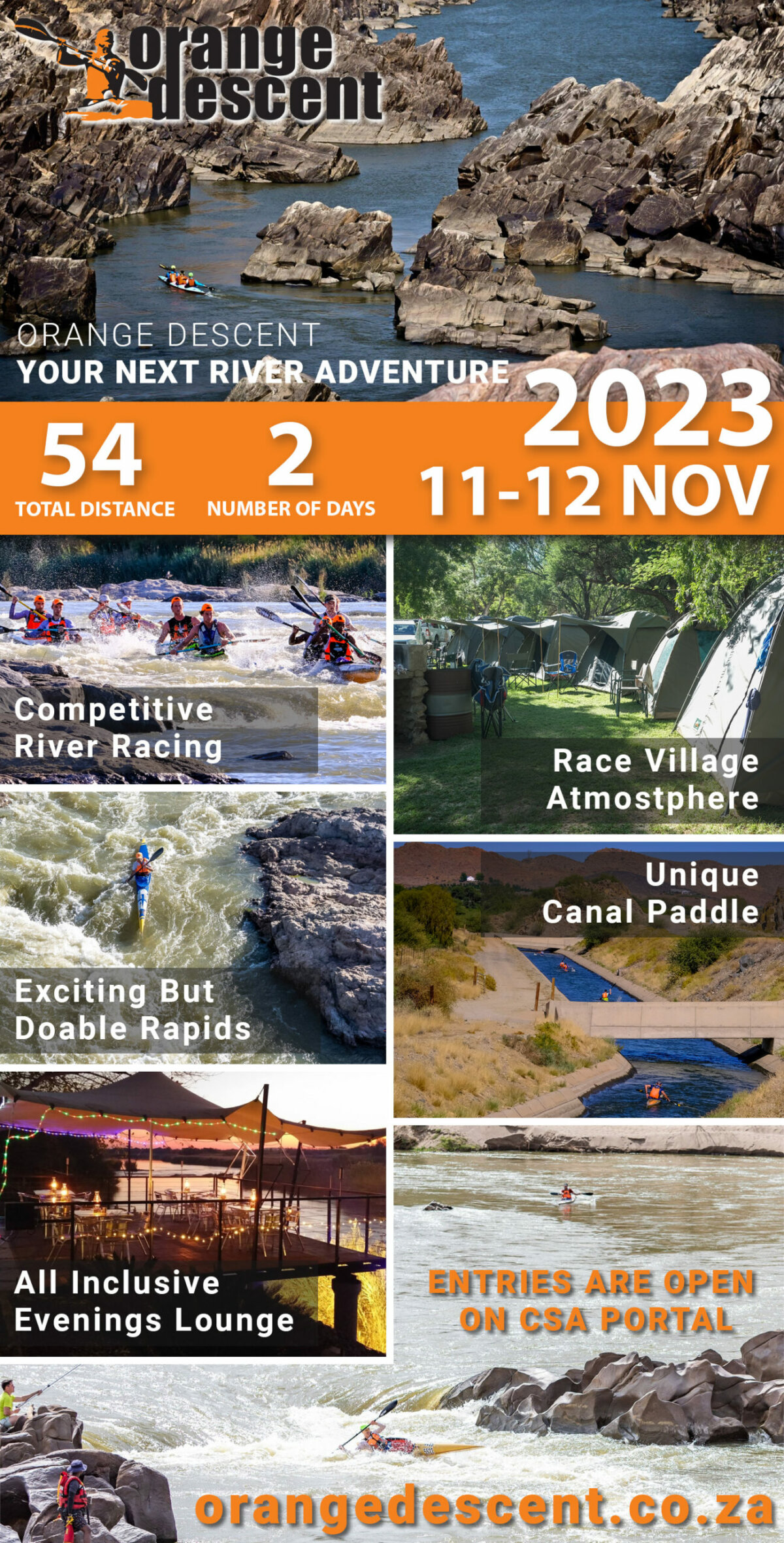
There are absolutely fantastic races around the country, where organisers put in a phenomenal amount of effort. These past few weeks are a prime example. Fish, Lowveld Croc, Pete Marlin and the Orange Descent. All of them individually well worth the trip, but financially beyond the reach of most.
Control: Once again, there is very little we can do about these costs. With declining numbers, race organisers are obliged to hike race entries just to cover the hosting costs.
Emigration and Semigration
The majority of our historic membership comes from a financial demographic that is middle to upper income. These are the individuals who are fortunate enough to seek a better life outside of the borders of our troubled nation. Many have taken advantage of have the opportunity. There is not one of us who does not know of a handful of mates and previous club members who now live abroad.
Control: Here again, not much we can do.
Tertiary Institutions
One of the largest paddling events on our calendar is the SA Schools sprint championships.
Historically, the largest group of starters at SA Marathon Champs is the junior boys.
Then, suddenly it all goes pear.
I have been at an SA Marathon Championships (Shongweni), where there were only 4 senior men on the start line. At our SA Sprint Champs, we often don't even need to have heats for the seniors.
There is a massive "disconnect" between our junior participation and our senior participation.
A number of reasons can be identified for this. One of them being our "almost dysfunctional" tertiary education landscape.
In the "old days", kids would go to the local university after they had finished school. There would be a far higher degree of "continuation" of youngsters in the sport. Universities such as Wits, Pietermaritzburg, Durban, etc. were top class institutions. As with many things in our country, this is no longer the case. There is now a very definite preference for two or three universities that appear, to some extent, to have escaped the clutches of the downward spiral.
Kids leave home and their paddling haven and often never return. Some provinces, like the Western Cape, benefit from this situation.
Control: Once again, very little that we can do about the situation.
Race Sponsorship
The financial environment in the country mirrors the political one to a large extent. Gone are the days of sponsors forming a queue for the privilege of supporting our events.
Major races such as the Dusi and the Fish sit without title sponsors.
The off spin of this is that the race organisers are forced to increase the entry fee (that is already under pressure due to a decline in numbers), and to reduce the offering to the participants – such as prize money, goody bags, Hansa girls, etc – making it less attractive to be at the event.
Control: This control is linked to the second point above. Sponsorship is hard to come by, but an increase in people who "put their hands up" will result in an increase in doors that get knocked on.
Facilities
Notwithstanding the diabolical water quality that has forced many off the water, the country does not have the luxury of stable and attractive training venues, with good facilities.
Besides venues such as Dabulamanzi and Roodeplaat, many of us train on stretches of water that have the potential of being effected by the vagaries of tidal fluctuations, flooding, insecure environments, lengthy travel, political interference, weed and hyacinth.
If we had attractive training venues close to metropolitan areas, there would be an automatic increase in membership, especially from schools. In the Durban/PMB area, for example, the Umgeni is putrid, Shongweni is "broken", Camps Drift is silted. To get to a stable paddling location, the kids would need to go to Midmar or Inanda, which would be time consuming and expensive.
As soon as a sport becomes "inconvenient" there will be a drift towards one that is not. After a hard day at work, one does not wish to drive for half an hour for a paddle. It is far easier just to jump on a bike or to put on a pair of running shoes.
Control: Ultimately, we are going to have to work with what we have. The Midmar situation is a prime example. Someone who was prepared to put their hand up, coupled with an attractive environment, has resulted in an exciting development. Our sport is not dead. It is hugely attractive. We just need to dig for it.
Lifestyles and Adventurous Spirit
With modern technology (those damn cell phones that our kids immerse themselves in, and live their lives through), coupled with hugely competitive and demanding school sport scenarios, there has been a definite shift away from the adventurous pasttimes that characterised the sport. Years ago it was common place for paddlers to be tripping, even doing multi-day trips down inaccessible rivers. One just needs to read books by Ian Player, Tim Biggs, Willem Van Riet, to appreciate the adventurous nature of those individuals. Sadly, it all seems to be lost. It is almost unheard of today.
Control: Besides the national outcry of attempting to limit "screen time", we are also a bit stuck on this one.
Funding
The budgets that many of the federations around the world receive from their governments is mind blowing.
Spain alone has received over a hundred million euros in support from their government for canoeing. There are international canoe federations that will be receiving over $10 million just for Olympic preparation.
This funding provides an opportunity for a structured coaching environment, athletes who do not need to work, and superb infrastructure.
Our national teams, however, are 100% self-funded (unless they have a private sponsor – If it were not for companies like Euro Steel, our competitive landscape would look very different).
It is absurd to think that someone like Hank, with 13 world championship titles, has not been better supported.
Control: It appears that Nelson Mandela's statement that sport has the power to change the world, has not been taken to heart by the current government. Our national sports budget is in the region of one billion rand. Yet mismanaged and corrupt SOE's are bailed out annually to the tune of hundreds of times that.
So, in summary, if you want to improve the situation, roll your sleeves up. Don't look to CSA. CSA consists of a single paid employee and all of your union chairmen. They have enough on their plates trying to keep their clubs afloat.
We have an incredibly fantastic sport. It will survive. We just need to find ways to make it. |